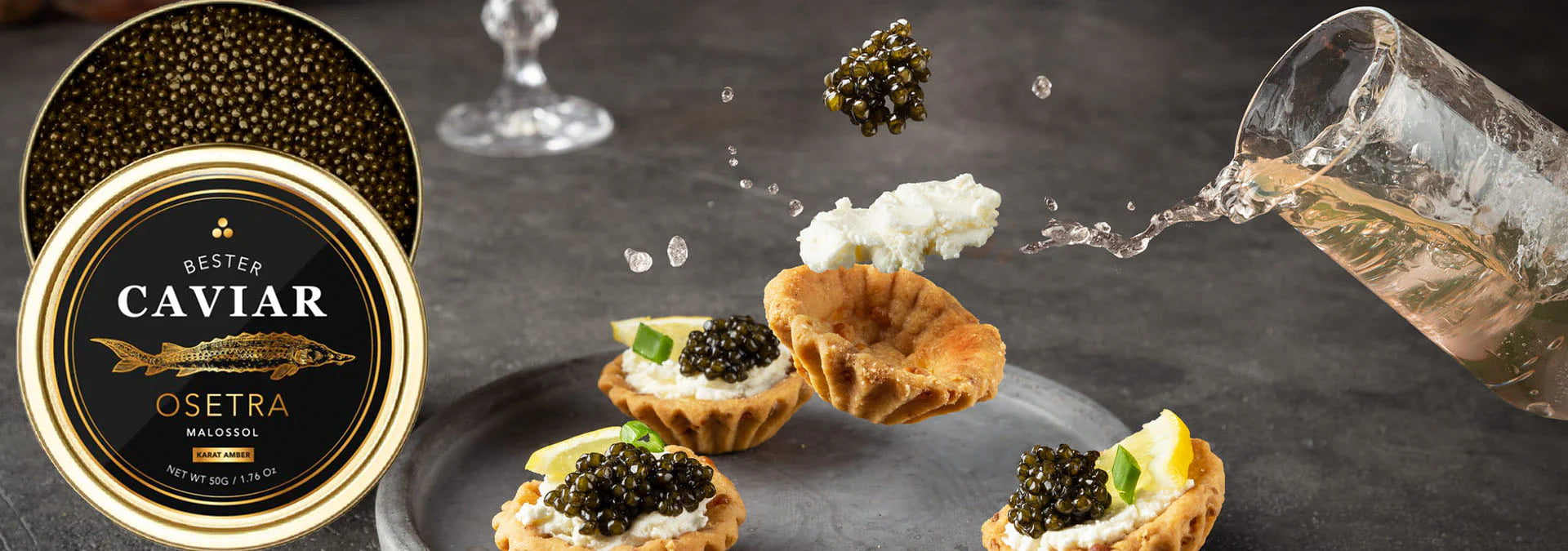

Caviar and blinis are a match made in heaven. This classic combination proved itself as a delicious appetizer for an elegant dinner party, vacation breakfast, or special celebration. With Bester Caviar, you always have an opportunity to buy caviar online and receive it the next day, so the other main ingredient is blinis. We prepared the best blinis recipes you can use at home and enjoy this fantastic treat.
Why Blinis and Caviar? A Tradition Worth Knowing
Few food pairings carry as much cultural weight as caviar and blini. The combination has its roots in Russian and Eastern European culinary tradition, where blinis — small, yeasted buckwheat pancakes — were served at celebrations, feasts, and festive gatherings for centuries. Caviar, once widely available along the Caspian and Volga rivers, became the topping of choice: its briny richness contrasting perfectly with the soft, slightly tangy base of the pancake.
What makes blini for caviar such an enduring combination is a matter of both flavor and function. The neutral, buttery body of the pancake acts as a blank canvas — it absorbs the saltiness of the roe without competing with it, and provides just enough substance to turn a single bite into a complete, satisfying experience. Unlike crackers or toast, blinis add warmth and texture that elevate caviar from a standalone garnish to the centerpiece of the table.
Today, caviar with blinis has moved well beyond traditional Russian dining. It appears on the menus of fine restaurants across the US and Europe, at holiday parties, and increasingly at casual home gatherings — thanks to the growing availability of quality caviar online and the simplicity of the blini recipe itself.
How to Make Blini for Caviar at Home
Making blini for caviar at home is easier than most people expect. Each of the three recipes below takes under 30 minutes of active prep time, and all three work equally well as a base for caviar with blinis. Choose the variety that suits your taste — or make all three for a tasting spread.
Wholemeal Blinis

A lighter, everyday option with a mild, nutty flavor that pairs well with both black and red caviar.
Makes 15–20 blinis | Prep: 10 min | Cook: 15 min
Ingredients:
- 1/3 cup whole wheat flour;
- 2/3 cup plain flour;
- 1/2 tsp baking powder;
- 1 egg;
- 1 cup milk;
- 3–4 tbsp unsalted butter;
- Salt to taste.
Instructions:
- Combine both flours, baking powder, and salt in a large bowl.
- In a separate bowl, whisk together the melted butter and egg, then add the milk and stir to combine.
- Pour the wet mixture into the dry ingredients and stir until you have a smooth batter. Do not overmix.
- Heat a non-stick pan or skillet over medium heat and melt a small knob of butter.
- Spoon the batter into the pan, forming circles of about 3–4 inches in diameter.
- Cook for 1–2 minutes per side until lightly golden. Repeat with the remaining batter.
Serve warm with your caviar topping of choice.
Buckwheat Blinis

The traditional choice for caviar and blini pairings. Buckwheat adds an earthy, slightly nutty depth that complements the ocean flavor of sturgeon roe beautifully.
Makes 20–25 blinis | Prep: 15 min + 1 hr 20 min resting | Cook: 20 min
Ingredients:
- 1/2 cup buckwheat flour;
- 2/3 cup plain flour;
- 1 tsp dry yeast;
- 1 cup warm milk;
- 1 egg;
- 2 tbsp melted butter;
- Salt to taste.
Instructions:
- Combine both flours, yeast, and salt in a large bowl.
- Gradually pour in the warm milk while whisking until you get a smooth batter. Cover with a clean kitchen towel and leave to rise for 1 hour.
- Separate the egg yolk and white. Stir the yolk into the risen batter.
- In a separate bowl, whisk the egg white to soft peaks, then gently fold it into the batter. Leave to rest for another 20 minutes.
- Heat a pan over medium heat, melt a small amount of butter, and spoon in the batter to form small circles.
- Cook for 1–2 minutes per side until golden. Continue until all the batter is used.
The extra resting time is worth it — buckwheat blinis have a lighter, more airy texture that makes them the preferred base among caviar enthusiasts.
Potato Blinis

This recipe for potato blini with caviar would be an interesting and intriguing variation for the popular appetizer. An underrated variation that brings a creamy, hearty base to caviar with blinis. Especially good with Osetra or Siberian Sturgeon caviar.
Makes 40–50 small blinis | Prep: 15 min | Cook: 20 min
Ingredients:
- 0.6 lb (270g) mashed potatoes, cooled;
- 1/3 cup plain flour;
- 3 tbsp milk;
- 1 whole egg;
- 3 egg whites;
- 1 tsp crème fraîche, plus more for serving;
- 1 tsp olive oil;
- Salt to taste.
Instructions:
- In a large bowl, combine the mashed potatoes, milk, and crème fraîche. Mix until smooth.
- Add the whole egg, olive oil, and salt, then whisk everything together.
- Fold in the flour until incorporated.
- In a separate bowl, whisk the egg whites to stiff peaks and gently fold into the potato mixture.
- Heat a lightly oiled pan over medium heat. Spoon small amounts of batter to form compact circles.
- Cook for 2–3 minutes per side until golden and set through.
No time to cook? Bester Caviar also carries ready-made blinis for caviar — a convenient option that works just as well for a last-minute caviar spread.
How to Serve Blinis and Caviar?
The base is ready — now comes the best part. Russian blinis with caviar are endlessly versatile: you can keep it classically minimal or layer up flavors for a more elaborate spread. Here are four topping combinations worth trying.
Blinis with Smoked Salmon and Caviar

A crowd-pleasing classic that looks far more impressive than the effort it requires. The combination of cold-smoked salmon, crème fraîche, and caviar on a warm blini covers every register — rich, smoky, briny, and creamy all at once.
Serves 8 | Prep: 10 min
Ingredients:
- 8 blinis (any variety from the recipes above);
- 4–6 oz sliced smoked salmon;
- 2 oz crème fraîche;
- 1.75 oz tin of Bester Caviar (Osetra or Siberian Sturgeon works well here);
- Fresh dill sprigs;
- Salt and freshly cracked black pepper to taste.
Instructions:
- If using store-bought or pre-made blinis, place them on a baking tray and warm in a preheated oven at 400°F for 3–4 minutes. This step makes a bigger difference than expected.
- Place a small dollop of crème fraîche on each blini.
- Top with a folded piece of smoked salmon.
- Add a small spoonful of caviar on top of the salmon.
- Finish with a sprig of fresh dill and a light crack of black pepper.
Serve immediately while the blinis are still warm.
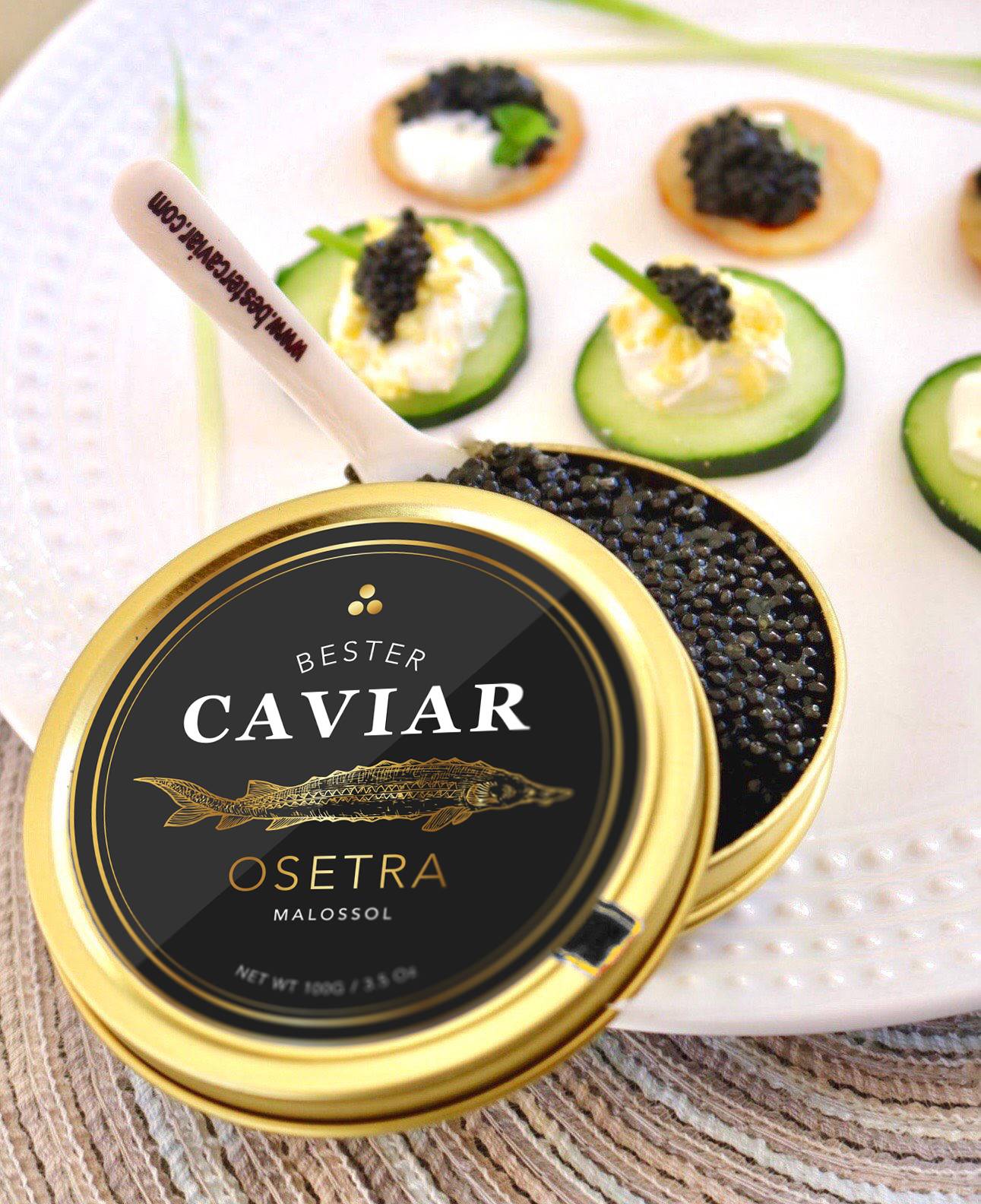
Blinis with Caviar and Sour Cream

The most minimalist and arguably the most honest way to eat caviar with blini. Nothing competes with the roe — just a neutral, creamy base that lets the caviar's flavor come through completely.
Serves 6 | Prep: 5 min
Ingredients:
- 6 blinis;
- 2–3 oz crème fraîche (or sour cream for a tangier profile);
- 1.75 oz tin of Bester Caviar;
- Fresh chives, finely chopped.
Instructions:
- Place a generous dollop of crème fraîche on each warm blini.
- Add a teaspoon of caviar on top.
- Garnish with chopped chives.
For a more substantial version, add a thin slice of cured ocean trout between the crème fraîche and the caviar. The trout adds a subtle richness without overpowering the roe.
Blinis with 3 Types of Caviar

For a true tasting experience, skip the additional toppings and let the caviar itself take center stage. Arrange three varieties side by side on each blini — for example, Caspian Osetra Karat Amber, Siberian Sturgeon, and salmon roe — and let guests compare the flavor profiles directly.
The contrast is striking: the nutty, complex notes of Osetra against the cleaner brininess of Siberian Sturgeon, with the pop and richness of salmon roe as a counterpoint. It's the most effective way to understand what makes each variety distinct, and one of the most memorable presentations for a dinner party.
Serve with a small side of unsalted crème fraîche and nothing else — the goal is to taste the caviar and blini combination in its purest form.
How to Eat Caviar with Blini: Serving Tips from Bester Caviar
Knowing how to eat caviar with blini properly makes the difference between a good experience and a great one. These are the details that matter:
- Temperature. Serve blinis warm — not hot, but fresh off the pan or just out of the oven. Caviar, on the other hand, should be served cold, straight from the tin placed on a bed of ice. The contrast of temperatures is part of what makes the combination so appealing.
- Quantity. For caviar and blini served as a starter, allow 1 oz (28g) of caviar per person alongside 3–4 blinis. If caviar with blinis is the main event — a tasting-style spread — increase to 1.5–2 oz per guest.
- Timing. Don't assemble blinis with toppings too far in advance. Caviar releases moisture quickly once opened, and blinis soften fast. Prepare the bases, have the toppings ready, and assemble just before serving.
- Utensils. Use a mother-of-pearl, bone, or plastic spoon to handle the caviar — never metal. Metal reacts with the roe and introduces a metallic note that changes the flavor. For the blinis themselves, a small offset spatula or regular serving spoon is fine.
- Make-ahead tip. Blini batter can be made up to 24 hours in advance and stored covered in the refrigerator. Cooked blinis can be made a few hours ahead and reheated in the oven at 300°F for 5 minutes before serving.
Conclusion
Caviar and blini is one of those rare combinations where simplicity and luxury meet without contradiction. Whether you make the batter from scratch or reach for a ready-made packet, whether you go classic with crème fraîche or build a full tasting board with three varieties of roe — the result is always greater than the sum of its parts.
The key is quality caviar. Blinis are forgiving and easy to master; the caviar is where the experience is made or lost. At Bester Caviar, all our sturgeon roes are sourced from certified eco-farms in Israel, Italy, and Madagascar and delivered overnight, fresh and never frozen — so what arrives at your door is exactly what belongs on top of a warm blini.
Browse our full caviar selection to find the variety that suits your table, or explore our gift sets for a complete blini and caviar experience ready to serve.
FAQ: Blinis and Caviar
- What is the best blini for caviar?
Buckwheat blinis are the traditional and most widely recommended choice for caviar and blini pairings. Their earthy, slightly nutty flavor complements the briny, oceanic notes of sturgeon caviar without overwhelming it. That said, wholemeal and potato blinis both work well depending on the caviar variety and the occasion — potato blinis in particular suit creamier, milder types like Siberian Sturgeon.
- How to eat caviar with blini?
Place a small dollop of crème fraîche or sour cream on a warm blini, add a teaspoon of caviar on top, and eat in one or two bites. Avoid overloading the blini — the ratio of caviar to base should keep the roe as the dominant flavor. Use a mother-of-pearl spoon to handle the caviar, and serve the tin on ice to keep it cold through the meal.
- Can you make blinis for caviar ahead of time?
Yes. Blini batter keeps well in the fridge for up to 24 hours. Cooked blinis can be made a few hours before serving and reheated in the oven at 300°F for 5 minutes. Avoid assembling with toppings until just before serving — caviar releases moisture quickly once opened and will soften the blini if left assembled for too long.
- What caviar goes best with blinis?
Osetra caviar — particularly Caspian Osetra Karat Amber or Karat Black — is the most classic pairing for caviar with blinis, thanks to its balanced saltiness and buttery finish. Siberian Sturgeon is a more approachable option with a slightly lighter flavor profile. For a festive, colorful spread, salmon roe (red caviar) works beautifully alongside black caviar on a three-variety blini board.
Written by Inna Polutska