
Caviar is one of the most luxurious delicacies in the world, but despite its reputation and price, it is actually far more fragile than most people realize. When we talk about caviar shelf life, we refer to how long this delicacy can maintain its freshness, flavor, and signature texture before it begins to deteriorate. And while caviar may look stable because it’s preserved in salt, the truth is simple: temperature is the number one factor that determines how long caviar lasts.
Whether you're planning a holiday dinner, a New Year’s celebration, or simply want to enjoy a spoonful of luxury at home, proper storage is essential. If you live in a warm climate like Florida, especially Miami, keeping caviar fresh becomes even more critical. That’s why many customers who buy caviar in Miami trust reliable suppliers like Bester Caviar to guarantee the correct cold chain and highest freshness.
In this article, we’ll explore how long does caviar last, what affects its freshness, the best storage temperature, and how to extend the shelf life of both fresh and pasteurized caviar. You’ll also learn expert tips on serving caviar while preserving its quality—and the biggest mistakes to avoid.
What Determines Caviar Shelf Life?
Several factors influence the shelf life of caviar, and understanding them helps you handle this delicacy correctly. Whether you’re buying premium sturgeon caviar, canned caviar, or pasteurized options, these three core elements decide how long it stays fresh:
-
Type of Caviar: Fresh vs Pasteurized
Fresh (malossol) caviar is minimally processed and contains little salt. It delivers the richest texture and flavor but has a shorter shelf life. Pasteurized caviar undergoes gentle heat treatment, making it more stable and long-lasting.
-
Storage Temperature
The most crucial factor is the caviar storage temperature. If caviar gets too warm—even for a short period—it begins to soften, oxidize, and lose flavor. Cold temperatures slow bacterial activity and preserve texture.
-
Packaging and Oxygen Exposure
Oxygen is caviar’s worst enemy. An open jar of caviar spoils significantly faster than an unopened tin because oxidation begins immediately after exposure to air.
Proper vacuum sealing, airtight packaging, and minimal handling can dramatically improve the freshness and caviar shelf life whether the tin is open or unopened.
Fresh vs Pasteurized Caviar: Shelf Life Differences
Before diving into numbers, it’s important to understand how these two types of caviar behave.
Fresh (Malossol) Caviar
Fresh malossol caviar contains low salt levels and is never heat-treated. This makes it incredibly delicate, flavorful, and perishable.
-
Unopened shelf life: Stored at ideal temperatures (28–30°F), unopened fresh caviar lasts 4–6 weeks.
-
Opened shelf life: Once opened, fresh caviar should be consumed within 1–2 days.
-
Why it spoils faster:
-
Minimal salt;
-
No pasteurization;
-
High sensitivity to oxygen;
-
Higher risk of bacterial growth.
This is why customers often search: how long does caviar last after opening — and with fresh caviar, the answer is: not long.
Pasteurized Caviar
Pasteurized caviar is heated in sealed jars to extend lifespan without fully ruining flavor.
-
Unopened shelf life: Stored at 32–38°F, pasteurized caviar lasts 3 to 12 months.
-
Opened shelf life: Once opened, it stays fresh for 3–5 days.
-
Texture and flavor: Slightly firmer, with a mild flavor difference, but ideal for longer storage, travel, or gifting.
Ideal Temperature for Storing Caviar
The recommended caviar storage temperature for maximum freshness is 28–30°F (-2 to -1°C). This is colder than most home refrigerators, which usually run at 36–40°F.
Why such low temperatures?
-
Slows oxidation;
-
Prevents harmful bacterial growth;
-
Preserves firmness;
-
Keeps the flavor intact.
Where to store caviar in the fridge?
Place the tin:
-
At the back of the refrigerator (coldest point);
-
On the bottom shelf;
-
Away from the door (temperature fluctuates there).
If you want to keep your caviar tasting as if it were just harvested, the caviar cold storage must never fluctuate.
Shelf Life by Temperature: Quick Reference Table
|
Storage Condition |
Temperature |
Shelf Life |
|
Unopened fresh caviar |
28–30°F |
4–6 weeks |
|
Opened fresh caviar |
28–30°F |
1–2 days |
|
Unopened pasteurized caviar |
32–38°F |
3–12 months |
|
Opened pasteurized caviar |
32–38°F |
3–5 days |
|
At room temperature |
68–72°F |
1–2 hours |
Essential Storage Tips to Extend Caviar Shelf Life
Even premium caviar can spoil quickly if stored poorly. These expert tips help maximize freshness:
-
Keep It Cold at All Times
From the moment you buy it until the second you eat it, caviar must remain cold. This includes transport, delivery, and home storage.
Avoid even short warm exposure — temperature swings reduce the shelf life of caviar dramatically.
-
Store Caviar Flat
Keeping the tin flat ensures the natural oils stay evenly distributed instead of settling.
Uneven oil distribution:
-
Makes the texture mushy;
-
Speeds up spoilage;
-
Affects flavor.
-
Keep Packaging Airtight
Air is the enemy. To extend caviar shelf life:
-
Press plastic wrap directly on the surface before closing the lid;
-
Store the tin inside an airtight container;
-
Avoid frequent opening.
This is especially important when dealing with an open jar of caviar that must be protected from oxidation.
-
Avoid Metal Contact
If the lid or tin is damaged, transfer the caviar into glass or ceramic.
Metal can:
-
Oxidize caviar;
-
Leave a metallic taste;
-
Shorten the caviar shelf life significantly.
-
Don’t Store in the Fridge Door
Temperature changes every time the fridge opens. This single mistake answers why many wonder: why did my caviar spoil so fast?
Freezing Caviar: When You Should (and Should Not) Freeze It
One of the most common questions people ask is: Can you freeze caviar?
The answer: Yes, you can freeze caviar — but you usually shouldn’t.
Why is freezing not recommended?
Freezing affects the membrane of the eggs, causing them to:
-
Burst;
-
Lose firmness;
-
Become mushy.
Premium sturgeon caviar should ideally never be frozen.
When is freezing acceptable?
-
Lower-grade roe;
-
Pasteurized caviar;
-
Bulk quantities you won’t use soon.
How to freeze caviar correctly?
If you absolutely must freeze caviar:
-
Freeze unopened caviar only;
-
Keep the tin sealed;
-
Freeze at a steady low temperature;
-
Thaw slowly in the refrigerator;
-
Never refreeze.
Thawing at room temperature will destroy the texture immediately.
Common Mistakes That Shorten Caviar Shelf Life
If you want to preserve caviar’s quality, avoid these common errors:
-
Keeping caviar in the fridge door;
-
Using metal utensils;
-
Leaving caviar open “for just a few minutes”;
-
Refreezing thawed caviar;
-
Serving caviar on a warm plate;
-
Letting caviar sit at room temperature for too long.
These mistakes accelerate oxidation and dramatically reduce the shelf life of both opened and unopened caviar.
How to Tell If Caviar Has Gone Bad
Even with perfect storage conditions, it's important to know the warning signs before serving caviar to guests — or to yourself. Does caviar go bad? Absolutely, and it does so faster than most luxury foods. Here's what to look for.
- Smell. Fresh caviar has a clean, oceanic scent — briny and subtly marine, but never sharp or offensive. If the tin smells sour, ammonia-like, or strongly fishy in an unpleasant way, the caviar has spoiled. This is the most reliable indicator, and it's usually unmistakable.
- Texture. Good caviar holds its shape: the eggs should be firm, distinct, and intact. If the roe has become mushy, collapsed, or sticky — either from temperature fluctuation or oxidation — the shelf life of caviar has been compromised. Mushy texture alone doesn't always mean the caviar is unsafe, but it signals a significant drop in quality.
- Appearance. Look for a natural sheen on the eggs. Dullness, discoloration, or a visible film on the surface of the roe are signs of deterioration. Excessive liquid pooling at the bottom of the tin — beyond the natural oil — is another red flag.
- Taste. If smell and appearance seem borderline, a tiny taste will confirm it. Spoiled caviar tastes noticeably sour, bitter, or rancid rather than clean and briny. When in doubt, don't serve it.
A practical rule: if you're questioning whether the caviar shelf life has passed, trust your senses over the date on the tin. Storage conditions vary, and even caviar within its printed date can deteriorate if the cold chain was interrupted at any point — during delivery, in transit, or in a domestic refrigerator that runs too warm.
The safest approach is always to buy from a supplier who guarantees an unbroken cold chain from farm to door — and to consume fresh caviar within the recommended window without testing the limits.
Serving Tips That Help Keep Caviar Fresh
Even while serving caviar at a party or dinner, you must protect it from warmth and oxidation.
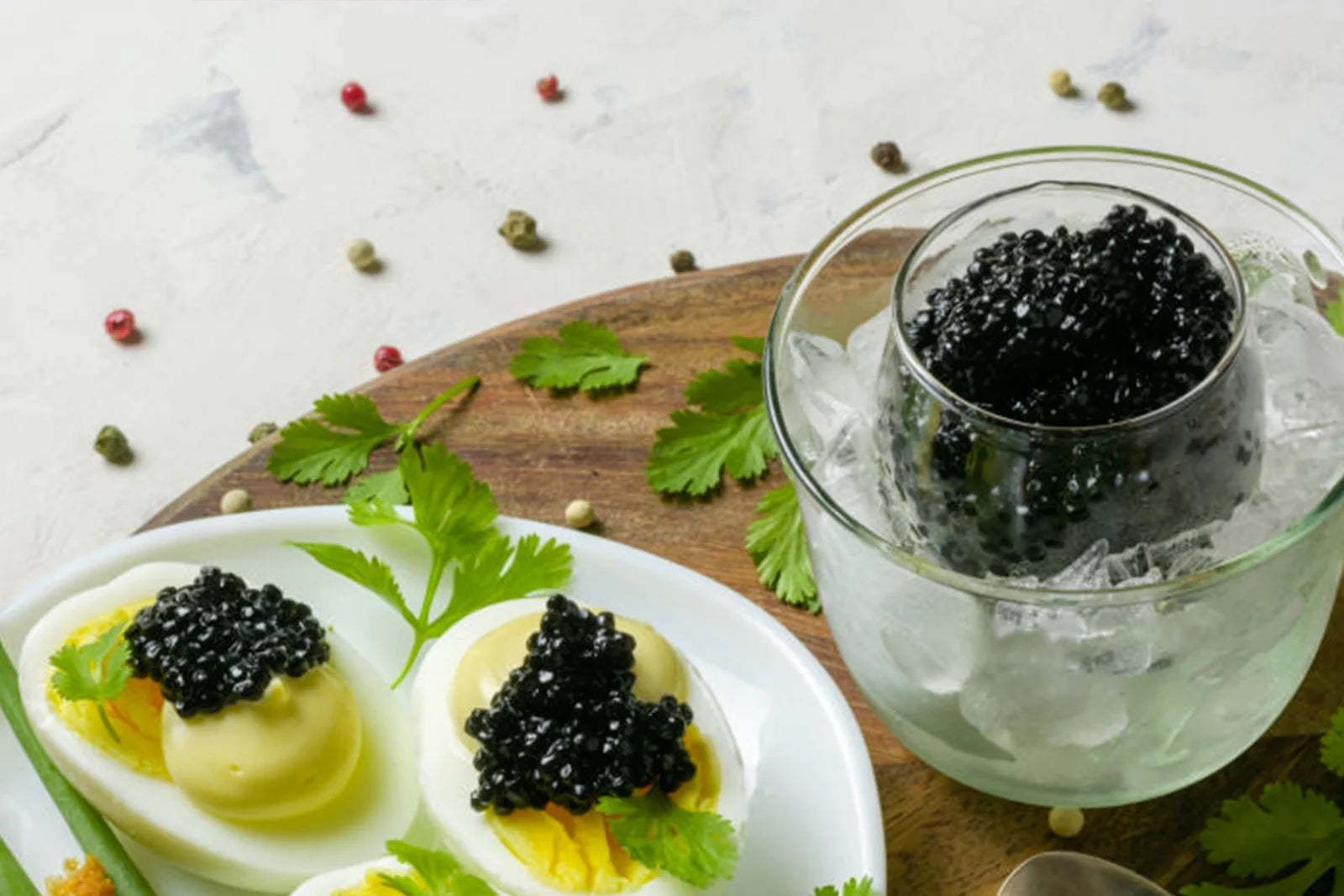
- Serve Over Ice: Always place the tin or bowl over crushed ice to keep the temperature stable.
- Keep the Lid On: When not actively serving, keep the tin closed.
- Don’t Leave Caviar Out Too Long: Fresh caviar should not stay at room temperature longer than one hour. Pasteurized caviar — no more than two hours.
-
Use Non-Metal Utensils: Recommended materials:
- Mother-of-pearl;
- Glass;
- Ceramic;
- Plastic.
Metal spoons can cause oxidation and unpleasant flavor changes.
Conclusion
Caviar is a delicate treasure that demands proper handling at every stage — from the cold chain during delivery to the way you store the tin in your refrigerator and serve it at the table. Understanding what determines the shelf life of caviar, how different storage conditions affect freshness, and how to recognize when caviar has gone bad will help you protect your investment and enjoy every pearl at its absolute peak.
The fundamentals are straightforward: keep it cold, keep it sealed, use the right utensils, and buy from a supplier you trust. Follow these principles, and caviar shelf life becomes something you manage confidently rather than worry about.
At Bester Caviar, every order is packed in temperature-controlled coolers and shipped overnight to guarantee the cold chain is never broken. Whether you're ordering Caspian Osetra, a caviar gift set, or exploring a regular supply through our Caviar Club subscription — freshness is built into every step of the process, not left to chance.
FAQ
-
How long does caviar last in the fridge?
If stored consistently at the correct temperature, unopened fresh caviar generally remains good for about four to six weeks. Once the seal is broken, its freshness window shrinks to one to two days. Pasteurized varieties keep significantly longer: their unopened shelf life ranges from three months up to a full year, while an opened jar should be enjoyed within three to five days.
-
How long does caviar last after opening?
After opening, fresh caviar has a very short lifespan — usually no more than a day or two. Pasteurized caviar is a bit more forgiving and stays safe to eat for roughly three to five days, assuming proper refrigeration.
-
Can you freeze caviar?
Technically, caviar can be frozen, but freezing is rarely recommended for high-end sturgeon roe. The delicate eggs tend to lose their firmness and become soft after thawing, which affects both texture and overall quality.
-
How long can caviar last out of the fridge?
Caviar should not be left at room temperature for long. In most cases, it begins to lose quality after about an hour, and shouldn’t remain unrefrigerated for more than one to two hours for safety reasons.
-
How long does caviar keep frozen?
If properly frozen, caviar can remain safe to consume for four to six months. However, the sooner you enjoy it, the better the texture will be, as prolonged freezing gradually diminishes quality.
- Does caviar go bad?
Yes — and it can do so quickly if storage conditions are not ideal. Fresh malossol caviar is particularly perishable: even a brief exposure to warm temperatures, oxygen, or metal contact can accelerate spoilage and shorten the shelf life of caviar significantly. The clearest signs that caviar has gone bad are a sour or ammonia-like smell, mushy texture, and dull or discolored eggs. Pasteurized caviar is more forgiving thanks to its heat treatment, but it will still spoil if left open too long or stored at incorrect temperatures. As a rule: when in doubt about whether caviar shelf life has passed, trust your nose first.
Written by Inna Polutska