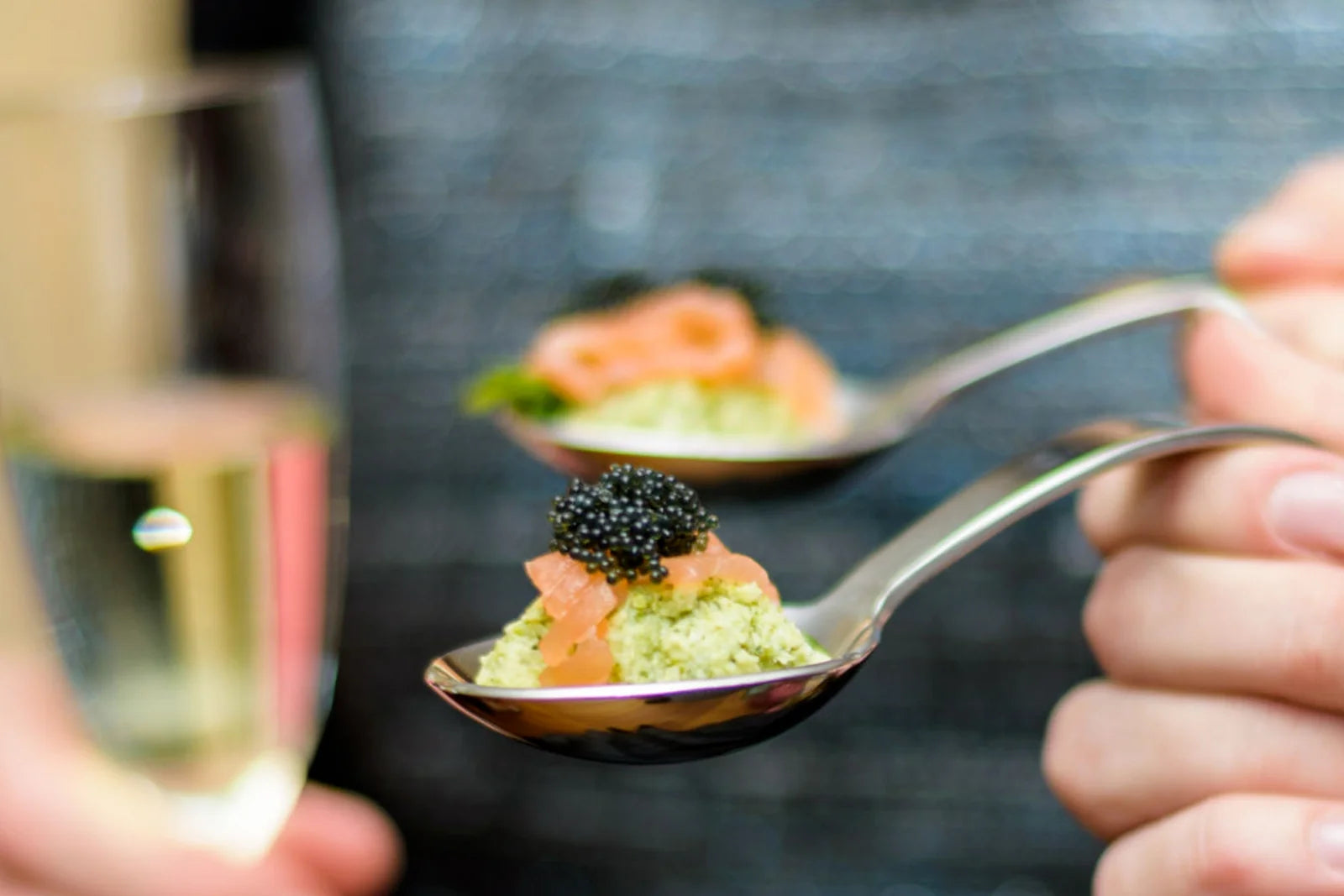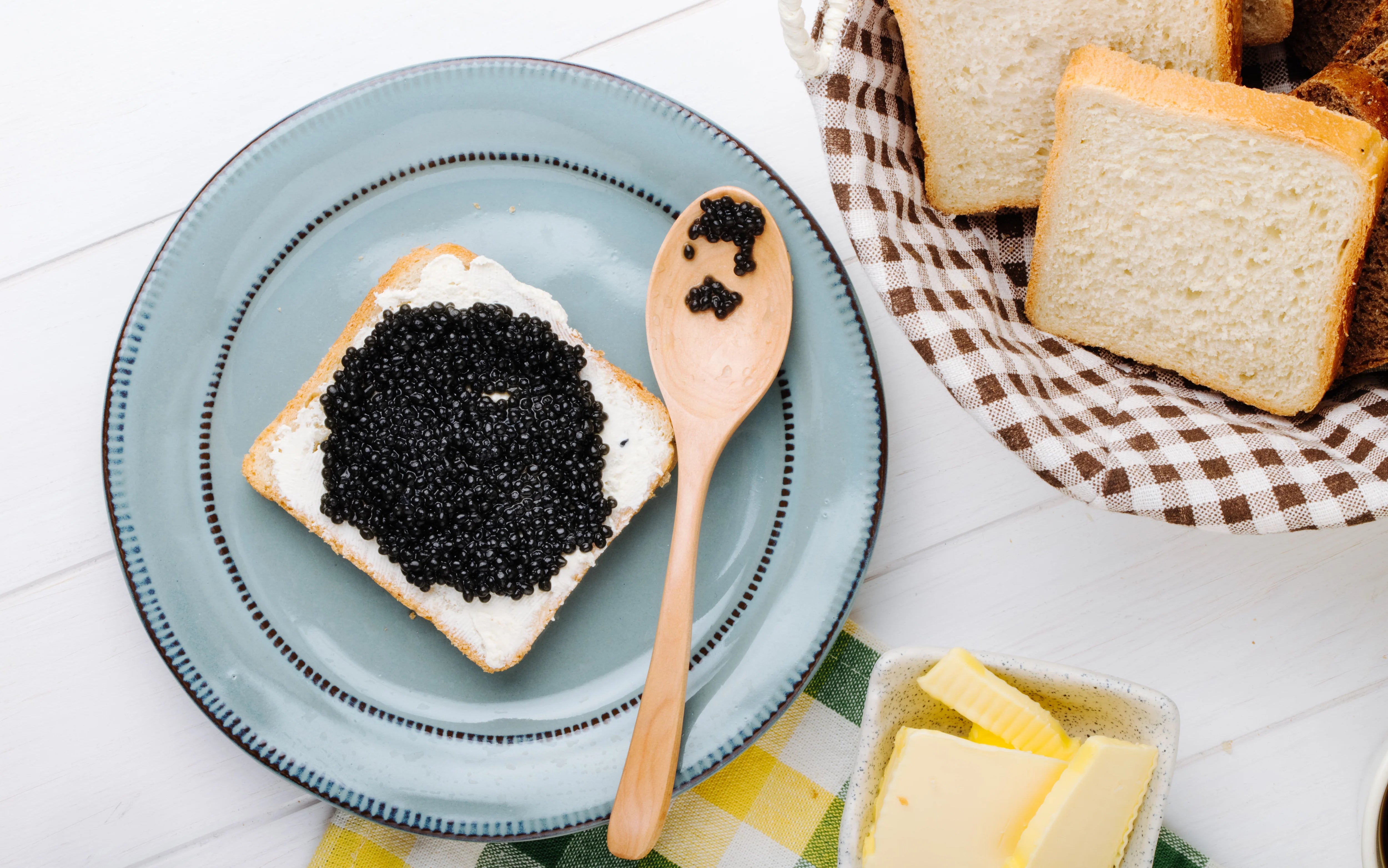

Caviar is considered one of the finest delicacies in the world — but for anyone trying it for the first time, the most pressing question is always the same: what does caviar taste like, exactly?
The honest answer is that caviar taste is more nuanced and varied than most people expect. It is not simply "salty fish eggs." Depending on the species, the farm, the curing process, and the freshness of the product, caviar can range from clean and oceanic to deeply buttery, from mildly briny to rich and nutty. First time eating caviar can be a genuinely surprising experience — and almost always a pleasant one, when the product is of high quality.
In this guide, we'll explore where caviar comes from, what determines its flavor, how the most popular varieties compare, and what to expect in terms of texture. By the end, you'll have a clear picture of the caviar flavor profile — and a much better sense of which variety suits your palate. The best way to understand it, of course, is still to try it.
Where Does Caviar Come From?
Caviar comes from the unfertilized eggs — or roe — of sturgeon, a family of ancient fish that have existed largely unchanged for over 200 million years. Sturgeons belong to the order Acipenseriformes and are found in rivers, lakes, and coastal seas across the Northern Hemisphere, from the Caspian Sea to the rivers of North America and the waterways of Europe.

What makes sturgeon unique — and what makes caviar so rare — is how long these fish take to mature. Depending on the species, female sturgeons don't begin producing roe until they are anywhere from 8 to 20 years old. The Beluga sturgeon, the largest freshwater fish in the world and the source of the most prized caviar, can live for over 100 years and reach lengths of up to six meters (19 ft), weighing as much as 1,600 kg (3,500 lb). Most other sturgeon species live between 50 and 80 years.
Because of this slow reproductive cycle, wild sturgeon populations have been under severe pressure for decades. Today, virtually all commercially available caviar — including all varieties sold by Bester Caviar — comes from certified aquaculture farms, where sturgeons are raised in controlled, clean environments with careful monitoring of water quality, diet, and harvesting conditions. This farming approach not only protects wild populations but also allows producers to control the factors that directly influence what sturgeon caviar taste like — with consistent, high-quality results.
What Does Black Caviar Taste Like?
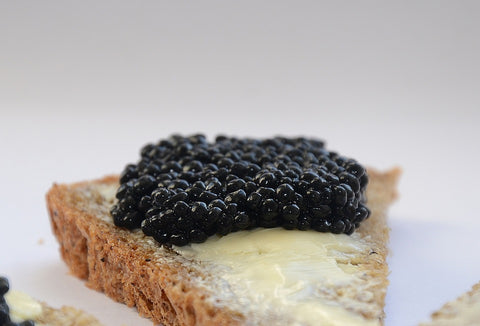 Black caviar taste is the benchmark against which all other roe is measured — but describing it precisely is one of the more challenging tasks in food writing. The flavors are subtle, layered, and highly dependent on variety and quality.
At its core, what does black caviar taste like? The baseline experience is a clean, oceanic brininess — similar to the smell of fresh sea air, but expressed as flavor. Good quality caviar should never taste aggressively salty or overtly fishy. If it does, that's a sign of poor handling, old stock, or low-grade processing. Premium black caviar from certified farms has a measured saltiness that enhances the other flavor notes without dominating them.
Beyond that baseline, the caviar flavor profile opens up considerably. The most consistent descriptors across varieties are:
- Buttery: a natural richness from the roe's high fat content, particularly omega-3 fatty acids, that creates a smooth, almost creamy sensation on the palate.
- Nutty: a subtle, toasted quality that is most pronounced in Osetra varieties and intensifies with aging.
- Umami: a deep savory note that gives caviar its addictive quality and is the reason it pairs so well with neutral bases like blinis, crème fraîche, and scrambled eggs.
-
Oceanic/mineral: a clean, fresh quality that the best caviar carries — reminiscent of fresh oysters or sea air rather than cooked fish.
Does caviar taste fishy? The short answer is: not if it's fresh and high quality. A pronounced "fishy" note in caviar is almost always a sign of age, improper storage, or a lower-grade product. Premium sturgeon caviar from a reputable source tastes briny and rich — but clean. The difference between good and great caviar is largely the absence of that fishiness and the presence of those buttery, nutty, umami layers.
What Affects Caviar Taste?
Understanding what affects caviar taste helps explain why two tins of "Osetra caviar" from different suppliers can taste noticeably different — and why sourcing matters as much as species.
- Species. The most fundamental factor. Each sturgeon species produces roe with a distinct flavor profile — from the mild, buttery character of Siberian Sturgeon to the complex, nutty depth of Caspian Osetra. More on this in the next section.
- Water quality and diet. Sturgeon raised in clean, mineral-rich water with a carefully controlled diet produce roe with a cleaner, more refined flavor. This is why caviar from certified eco-farms in Israel, Italy, and Madagascar — like those Bester Caviar works with — consistently outperforms mass-produced alternatives. The fish's environment is directly expressed in the taste of the eggs.
- Salting process. All commercial caviar is treated with salt — the "malossol" designation (from Russian, meaning "little salt") indicates the lightest treatment, typically under 5% salt by weight. Malossol caviar preserves the roe's natural flavor most faithfully. Heavier salting, used in pasteurized or pressed caviar, significantly alters the flavor profile and produces a stronger, more assertive taste.
- Freshness. Caviar is highly perishable. Fresh caviar — properly handled and consumed within its recommended window — has a vivid, clean flavor with distinct individual eggs. As it ages, the eggs soften, the flavor becomes muddier, and that unwanted "fishy" note can develop. This is why cold chain integrity from farm to delivery matters enormously.
- Maturity of the fish. Older, more mature sturgeon tend to produce roe with greater complexity and depth of flavor. This is one reason why caviar from older fish commands higher prices — the eggs carry more character.
Caviar Texture: What to Expect
Caviar texture is as important to the overall experience as flavor — and for many first-time tasters, it's the most surprising element.
Premium caviar should consist of distinct, firm, individual eggs that hold their shape on the spoon and on the palate. When you place caviar on your tongue and apply gentle pressure, the eggs should pop cleanly — releasing their flavor in a single, vivid burst. This is what caviar connoisseurs refer to as the "pop," and it's one of the hallmarks of quality roe. Eggs that are mushy, collapsed, or pasty indicate either poor quality or improper storage.
Beyond that fundamental firmness, caviar texture varies by variety:
- Siberian Sturgeon produces medium-sized eggs with a soft, smooth texture and a gentle pop — the most approachable caviar texture for first-time eating caviar.
- Osetra varieties tend to have a firmer egg with a more pronounced pop and a slightly denser, more complex mouthfeel.
- Beluga Hybrid caviar features large, delicate eggs with a silky, almost creamy texture — the softest and most luxurious mouthfeel of any sturgeon variety.
- Pressed caviar (Payusnaya) has a completely different texture — a dense, spreadable paste made from broken eggs. No pop, but intense concentrated flavor.
The size of the egg also affects perception of texture. Larger eggs — like those of Beluga Hybrid — feel more substantial and release flavor more slowly. Smaller eggs, like those of Sevruga, deliver a quicker, sharper burst. Neither is inherently better — it's a matter of personal preference and the occasion.
What Does Each Type of Caviar Taste Like?
Not all caviar tastes the same — not even remotely. The caviar taste varies significantly by species, and understanding these differences is the key to choosing the right variety for your palate and occasion. Here are the most important varieties and what to expect from each.
Siberian Sturgeon Caviar
What does Siberian caviar taste like? This is the most widely farmed and widely available sturgeon variety, and for good reason — it produces a consistently clean, approachable flavor profile that works for newcomers and experienced tasters alike. The taste is mildly briny with a natural butteriness and a smooth, slightly oceanic finish. Less complex than Osetra but never one-dimensional. Siberian Sturgeon is the natural starting point for first time eating caviar, and it remains a favorite among connoisseurs who appreciate its understated elegance. The eggs are medium-sized with a gentle, satisfying pop.
Osetra Caviar
What does Osetra caviar taste like? Osetra — also spelled Ossetra — is widely regarded as the most versatile and nuanced of all sturgeon varieties, and it is the flagship product of Bester Caviar. The flavor is notably more complex than Siberian Sturgeon: a rich, nutty depth with buttery undertones, clean brininess, and a long, satisfying finish. Some Osetra varieties — particularly older fish from Caspian farms — develop a distinctly amber color and a hazelnut-like quality that is among the most prized flavor profiles in all of caviar. The eggs are medium to large with a firm texture and a pronounced, clean pop. For anyone wondering what does sturgeon caviar taste like at its most expressive, Osetra is the answer.
Beluga and Beluga Hybrid Caviar
What does Beluga caviar taste like? Beluga is the rarest and most expensive caviar in the world — and its flavor reflects that status. The taste is remarkably smooth and delicate: a mild, creamy brininess with almost no sharp or assertive notes, and a long, buttery finish that lingers on the palate. The eggs are the largest of any sturgeon variety, with a silky texture and a soft, gentle pop. Because true Beluga sturgeon (Huso huso) is protected and its caviar banned from import in the US, most Beluga-style caviar available today comes from a Beluga Hybrid cross (Huso huso × Acipenser baerii). This hybrid retains much of the original's smooth, creamy character while adding a subtle earthiness from the Siberian parent — a compelling combination at a more accessible price point.
Sevruga Caviar
Sevruga is the smallest of the three classic Caspian caviar species, and its roe reflects that compactness. The eggs are small and dark, with a notably sharper, more assertive flavor than Osetra or Beluga — more intensely briny, with a fresh, almost herbal quality. Sevruga is the caviar for those who prefer bold, direct flavors over subtlety. It's less widely available than Siberian or Osetra varieties but worth seeking out for its distinctiveness.
Our Best Selling Caviar — Find Your Flavor
Ready to experience the caviar flavor profile for yourself? Here are our most popular varieties, each with a distinct taste character to suit different palates.
Caviar Osietra Classic by Giaveri - the price start from $99 per ounce.
- Species : Ossetra Sturgeon (Acipenser Gueldenstaedtii)
- Color : Amber to Golden
- Taste: Rich Nutty Flavor with Clean Finish & Light Pop
- Texture: Firm
- Country of Origin: Italy
Royal Osetra Caviar by Bester Caviar - the price start from $149 per 1,76 ounce.
- Species: Acipenser Guldenstadtii
- Coloring: Amber, with subtle hints of gold
- Taste: Bold, briny, nutty flavor with a firm texture that creates a pleasing pop under light pressure of your tongue.
- Size: Medium to large
Royal Beluga Hybrid Gift Set (Huso Huso X Baerii) by Bester Caviar - the price start from $185 per ounce.
- Species: Huso Huso X Baerii
- Color: Grey or brownish color
- Taste: Smooth, silky texture, the bold nuttiness of traditional Beluga with a hint of earthy & creamy tones from Siberian
- Size: Medium to large firm pearls
- Country: Farmed-raised in Italy
Royal Beluga Hybrid by Giaveri - the price start from $169 per ounce.
- Species: Beluga Siberian (Huso x Baerii)
- Color: From light-grey to black
- Taste: Rich creamy flavor & tender texture with complexity of sweet overtones
- Size: Large pearls
- Country: Farmed-raised in Italy
You already learned where caviar comes from and what species are farmed to get this delicacy.
Are you still wondering how does caviar taste like? Now you need to try it! Visit our shop and choose the one you prefer. We assure you you won't regret it!
FAQ
- What does caviar taste like?
Caviar typically has a distinct taste described as briny, buttery, and sometimes with a hint of nuttiness. The texture is often smooth and creamy.
- What does caviar look like?
Caviar appears as small, glossy, and round beads with a translucent quality. The color can range from light to dark, depending on the type of caviar.
- What fish do caviar eggs come from?
Caviar eggs primarily come from sturgeon. However, caviar can also be sourced from other fish like paddlefish, salmon, and trout, each offering distinct flavors and textures.
- What is the best caviar in the world?
Beluga caviar is often considered one of the best, prized for its large, delicate eggs and rich, creamy flavor. Osetra caviar is also highly regarded for its unique nutty and buttery taste. Preferences may vary among individuals.
- What does sturgeon taste like?
Sturgeon meat is often described as delicate and mild, with a flavor profile that combines elements of fish and shellfish. The texture is usually firm and buttery.
- Does caviar taste fishy?
No — not if it is fresh and of high quality. Premium sturgeon caviar from a certified source has a clean, oceanic brininess with buttery and nutty notes, but no pronounced "fishiness." A fishy taste in caviar is almost always a sign of age, improper storage, or a lower-grade product. If you've tried caviar before and found it overly fishy, the product was likely not at its best. High-quality, freshly delivered caviar tastes clean and rich — not like canned fish.
- What does Osetra caviar taste like compared to other varieties?
Osetra caviar has the most complex and nuanced caviar flavor profile of the commonly available sturgeon varieties. Compared to Siberian Sturgeon, it is richer, nuttier, and more assertive — with a pronounced hazelnut quality in the finest examples. Compared to Beluga, it is firmer in texture and more structured in flavor, with less of that silky creaminess. For most caviar enthusiasts, Osetra represents the ideal balance between approachability and complexity — which is why it is consistently the best-selling variety at Bester Caviar.
- What is the best caviar for someone trying it for the first time?
For first time eating caviar, Siberian Sturgeon is the most recommended starting point. Its flavor is clean, mildly briny, and gently buttery — complex enough to be interesting, but not so assertive as to be overwhelming. Royal Osetra is an excellent step up for those who want a richer, more structured caviar taste experience from the first tasting. Both are available at Bester Caviar and ship overnight across the US.
Conclusion
So — what does caviar taste like? Clean and oceanic at its base, with layers of butter, nuttiness, and umami that vary meaningfully by species, farm, and handling. Not fishy. Not overwhelmingly salty. And almost always surprising in the best way for anyone encountering quality caviar for the first time.
The caviar flavor profile is something you can read about, study, and discuss — but it only truly makes sense the moment the eggs pop on your palate and you experience that combination of brine, richness, and depth firsthand.
At Bester Caviar, all our sturgeon roes are sourced from certified eco-farms in Israel, Italy, and Madagascar and shipped overnight across all US states. Browse our full caviar selection to find the variety that suits your palate, or explore our caviar gift sets for a curated tasting experience. For a deeper dive into how to choose between varieties, our Buyer's Guide to Black Caviar is the natural next read.
Written by Inna Polutska